
The WhatsApp Dilemma: Is Your "End-to-End Encryption" Really a Vault?
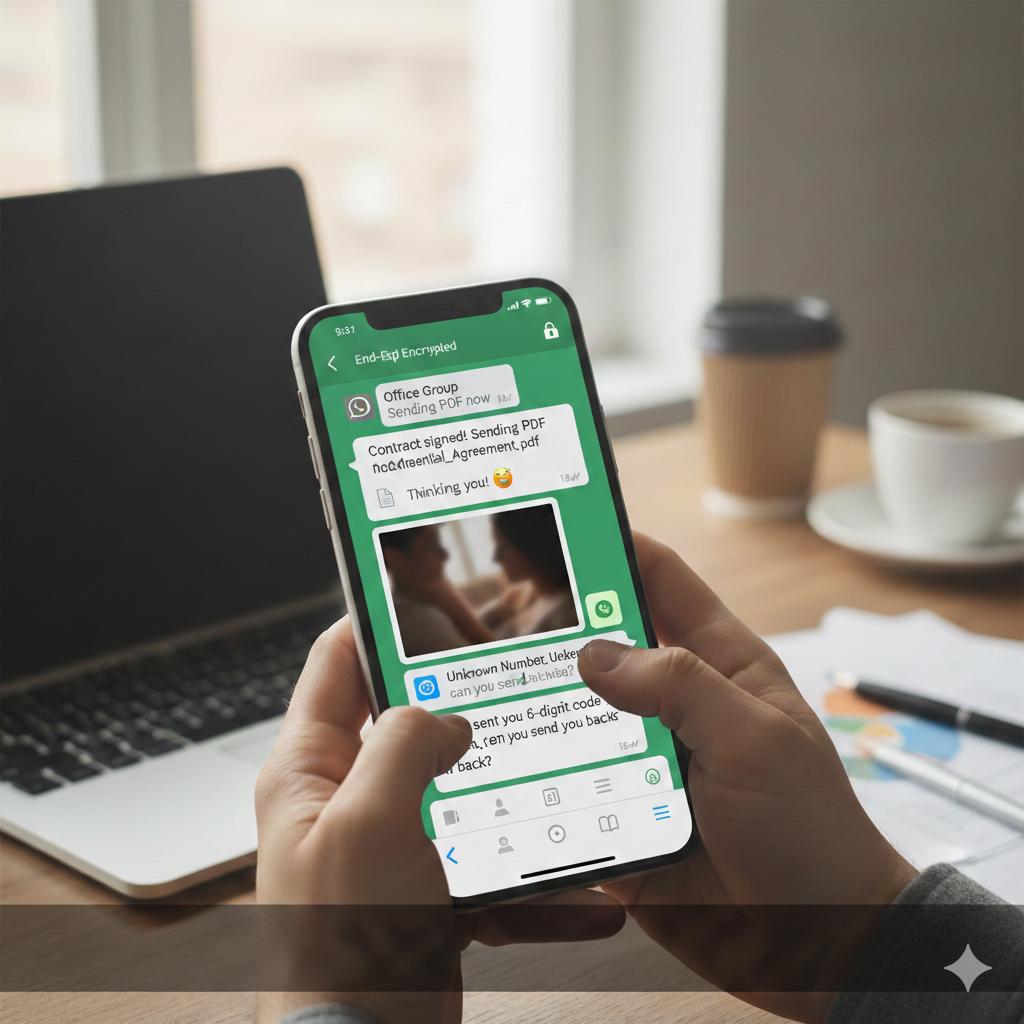
We’ve all heard the rumours at the office coffee station or in the family group chat. Someone’s cousin "got hacked." A celebrity’s private photos leaked. A coworker warns, "Don't send that contract over WhatsApp; the hackers are watching!"
It leads to a massive question that haunts our digital lives: Is WhatsApp actually safe, or is the "End-to-End Encryption" label just a marketing gimmick?
Whether you are sending a confidential work contract or a private photo to a partner, the stakes couldn't be higher. Let’s pull back the curtain on how WhatsApp actually works and where the real dangers lie.
What Does "End-to-End" Actually Mean?
Imagine you write a secret letter, put it in a titanium box, and lock it with a key only you and your friend have. You send that box through the mail. Even if the mailman, a thief, or the post office manager steals the box, they can’t see inside. They don’t have the key.
"That is End-to-End Encryption (E2EE)."
When WhatsApp says your messages are encrypted, they mean that only the sender and the receiver have the "keys" to read the data. Not even WhatsApp (Meta) can see your texts, hear your calls, or view your documents. From a purely technical standpoint: No, hackers cannot simply "sniff" your messages out of the air while they are being sent.
The Big Question: Can WhatsApp Be Hacked?
If the encryption is so strong, why do we keep hearing about people losing their accounts?
The truth is, hackers rarely "break" the encryption; they "trick" the person. Here is how most "hacks" actually happen:
- Social Engineering: You get a text saying, "I sent you a 6-digit code by mistake, can you send it back?" If you send that code, you’ve just given the hacker the key to log into your account on their phone.
- The "Web" Weak Link: If you leave your WhatsApp Web logged in on a public computer, anyone can walk up and read your entire history.
- Spyware: There is high-level software (like Pegasus) used by governments or elite hackers. This doesn't "break" WhatsApp; it infects the entire phone, taking screenshots of your screen before the message is even encrypted.
WhatsApp in the Workplace: Is It Professional?
Many of us send memos, meeting minutes, and even signed contracts via WhatsApp because it’s fast. But "safe" and "appropriate" are two different things.
While the message is encrypted, using WhatsApp for business has two major risks:
- The "Backup" Trap: While the chat is encrypted, many people back up their chats to Google Drive or iCloud. If those cloud accounts aren't secured with a strong password and Two-Factor Authentication (2FA), your "confidential" work document is sitting there, waiting to be found.
- Lack of Control: If a staff member leaves the company on bad terms, they still have all those confidential PDFs on their personal phone. You can't "un-send" a contract once it's downloaded.
The Verdict: WhatsApp is fine for quick updates ("I'm running late!"), but for sensitive contracts or trade secrets, a dedicated, company-controlled platform is always safer.
Private Photos and the "Point of No Return"
The younger generation often uses WhatsApp for intimate sharing. While the E2EE keeps the "middleman" out, it doesn't protect you from the person on the other side.
Once you hit send, you lose control. If the receiver’s phone is stolen, or if the relationship turns sour, those "private" photos can end up on the internet in seconds. No amount of encryption can prevent a recipient from taking a screenshot or a photo of their screen with another camera.
How to Turn Your WhatsApp into a Fortress
Don't panic—just get smart. If you want to keep your documents and photos safe, do these three things right now:
- Enable Two-Step Verification: This is the most important step. Go to Settings > Account > Two-Step Verification. Even if a hacker steals your SIM card, they can't get into your WhatsApp without your PIN.
- Check Your Linked Devices: Regularly look at Settings > Linked Devices. If you see a computer you don’t recognize, log it out immediately.
- Encrypted Backups: If you back up to the cloud, turn on "End-to-End Encrypted Backup" in your Chat settings. This puts a password on your Google/iCloud backup so even the cloud providers can't read it.
The Bottom Line
Is WhatsApp hackable? The encryption is solid, but human error is the weak point. Whether you’re handling a million-dollar contract or a private family moment, the golden rule remains: Technology provides the lock, but you are the gatekeeper. Treat your digital keys with the same care you treat your house keys.