
AI in the Music Industry: What Happens When Everyone Can Make a Hit?
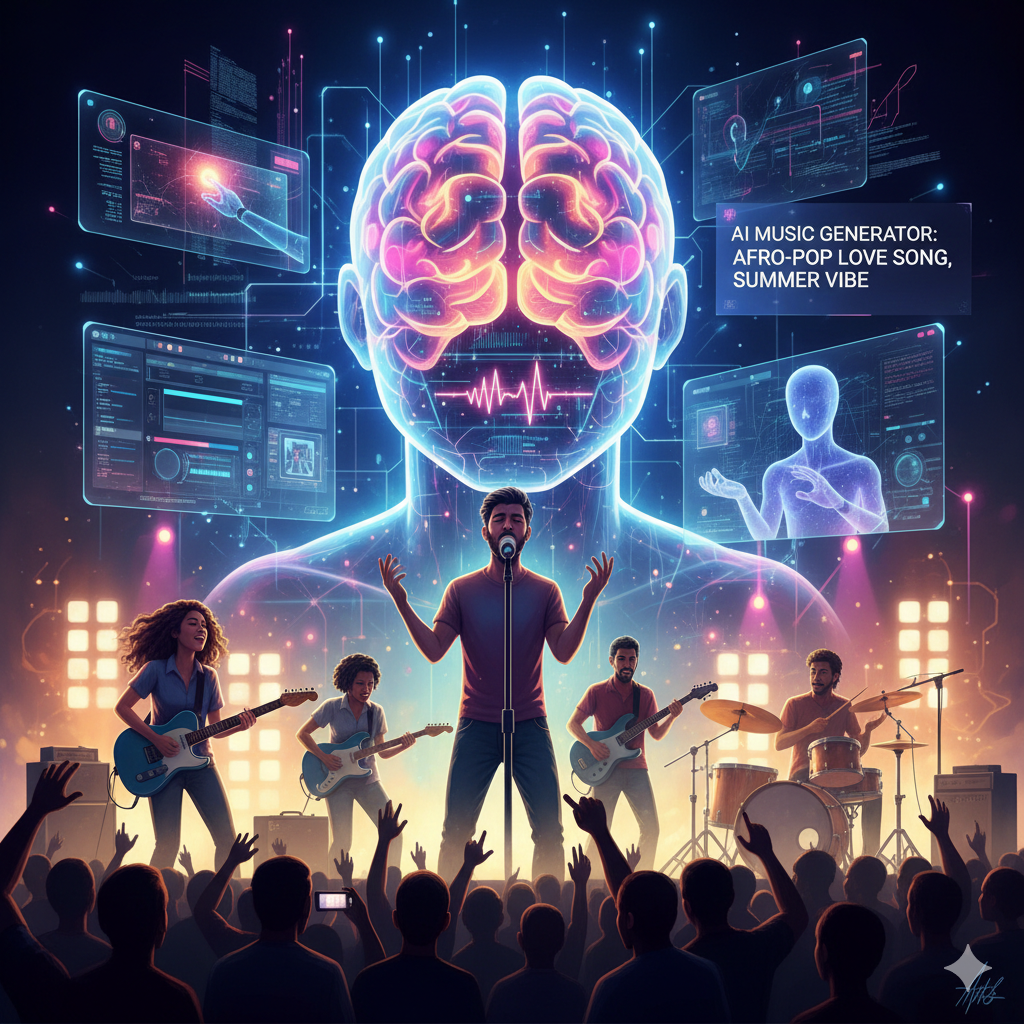
AI in the music industry is no longer a future idea — it’s already here.
Today, you can type a simple prompt like:
“Create a catchy Afro-pop love song with a summer vibe.”
And within seconds, AI can generate lyrics, suggest melodies, build instrumentals, and even produce studio-quality vocals.
Something that once required talent, years of practice, expensive equipment, and access to a studio… now takes minutes.
So naturally, people are asking:
Where is the music industry headed?
AI Is Making Music Creation Easier Than Ever
Let’s be honest.
Writing a good song used to be difficult.
You needed:
- Strong lyric writing skills
- A sense of rhythm and melody
- Production knowledge
- Access to good instruments or software
Now, AI tools can:
- Generate full song structures
- Create beats and chord progressions
- Produce realistic instrumentals
- Enhance or even simulate vocals
For the average person, this is exciting.
For professional musicians, it’s complicated.
Because if everyone can create good-quality music using AI, what makes an artist special?
If Everyone Can Create Music, Will Quality Matter?
AI in the music industry is lowering the barrier to entry.
That means:
- More music will be released than ever before
- Competition will increase
- Trends will move faster
But here’s the thing:
When everything sounds polished and “perfect,” perfection stops being impressive.
In the future, people may care less about flawless production — and more about authenticity.
Will Live Shows Still Matter?
One big concern is whether AI-generated music will reduce interest in live performances.
Honestly? Probably not.
Live shows are not just about sound quality.
They’re about:
- Energy
- Presence
- Emotion
- Connection
You can stream AI-generated songs all day, but you can’t replace the feeling of being in a crowd, watching a real artist perform.
In fact, as AI in the music industry grows, live performances may become even more valuable.
What About Artists With Real Voices?
This is the big question.
If AI can generate beautiful vocals, what happens to artists who genuinely have great voices?
The truth is, talent alone has never been enough.
Even before AI, success depended on:
- Branding
- Marketing
- Personality
- Consistency
In the future, artists who combine real talent with smart use of AI tools may dominate.
AI may not replace musicians — it may simply become another instrument.
The Future of the Music Industry
AI in the music industry is not the end of human creativity.
It’s a shift.
We’re likely to see:
- More independent creators
- Faster music production
- Increased use of AI in songwriting and mixing
- Greater focus on personal branding
The artists who adapt will survive.
The ones who ignore the technology may struggle.
But one thing remains true:
People connect with people.
Not algorithms.
Final Thoughts
AI in the music industry is changing how music is created — but not why it matters.
Yes, millions may be able to generate songs.
Yes, production quality will become easier to achieve.
But emotion, story, and connection still belong to humans.
And as long as humans crave connection, real artists will still have a place.